Revitalizing Community Waste Bank with Training and Digital Payment Innovation
Published on September 15, 2025
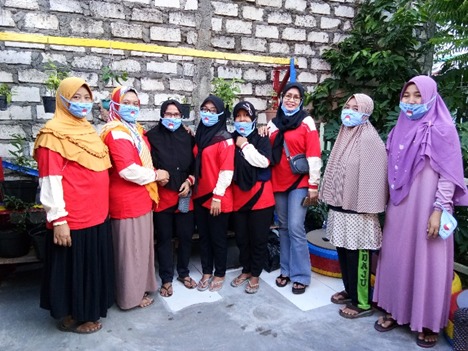
Surabaya – A community service program has successfully revitalized the Bank Sampah (Waste Bank) in RT 20, Tanah Kali Kedinding, Kenjeran District, Surabaya, which had previously been inactive due to poor management and limited facilities. The initiative, carried out from July to October 2020, involved collaboration between local youth organizations (Karang Taruna), women’s groups (PKK), Yayasan Mandiri Ukhuwah Persada, and academic partners from Faculty of Economics and Business, Airlangga University.
The program began with coordination meetings and the signing of cooperation agreements, followed by training on waste bank management and the introduction of non-cash payment systems. Community members also worked together to renovate the waste bank’s office and provide new facilities, including composters and sacks for household waste sorting. Socialization sessions were held to encourage residents to separate their waste properly before depositing it at the waste bank.
One major innovation introduced was the concept of non-cash payments for transactions. Although initially planned to be used for household utility payments such as electricity or phone credit, the funds collected from waste deposits are currently saved at BMT MUDA, a local cooperative, and can be withdrawn at the end of the year. This system not only improves financial transparency but also increases community motivation to participate.
In addition, the program introduced herbal plant (TOGA) cultivation as an added value activity. Waste bank cadres were trained to recycle plastic waste into pots, produce organic fertilizer, and grow medicinal plants such as turmeric, ginger, aloe vera, and lemongrass. The initiative has not only improved the environment but also provided health and economic benefits for local households.